3D Live Streaming Icon Design Collection: A Practical Guide to Visual Assets for Broadcasters
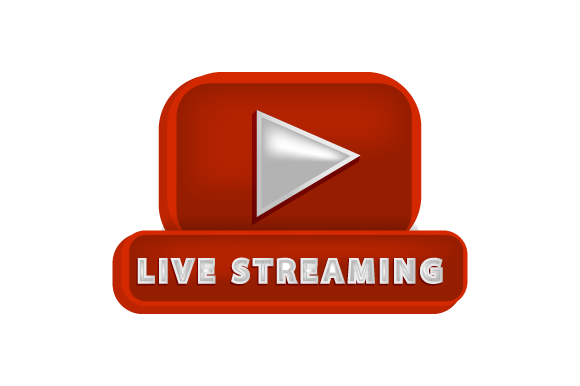
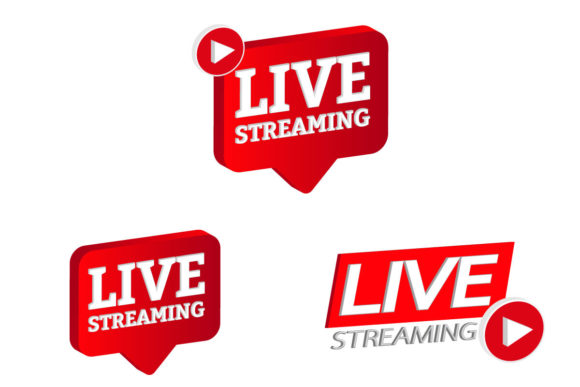
In the rapidly evolving landscape of digital media, visual identity is no longer just about logos or static branding. For content creators, broadcasters, and production teams, the immediate recognition of a live feed is critical. This is where the 3D Live Streaming Icon Design Collection becomes a vital component of modern broadcasting workflows. Unlike flat, two-dimensional graphics that have dominated design for years, this collection offers depth, texture, and dynamic lighting effects that mimic real-world objects. The set includes red symbols and buttons specifically designed for live streaming, broadcasting, online streams, and video news screens.
Understanding the nuances of these assets helps professionals decide when to invest in 3D elements versus traditional vector graphics. Whether you are managing a live event, running a TV show, or producing movie trailers, the choice of visual overlay can significantly impact viewer engagement. This guide explores what makes this specific design collection distinct, how it compares to alternative approaches, and the practical tradeoffs involved in integrating 3D lower thirds and icons into your production pipeline.
Distinguishing Features of the 3D Live Streaming Icon Design Collection
The primary differentiator of the 3D Live Streaming Icon Design Collection lies in its dimensional quality. While standard icon sets rely on solid colors and simple shapes to convey meaning, this collection utilizes shading, gradients, and perspective to create a sense of volume. The "red symbols" mentioned in the design brief are not merely flat red circles; they possess highlights and shadows that suggest a physical button or a glowing LED indicator. This approach aligns with current trends in UI/UX design where skeuomorphism and neumorphism are being revisited to create more tactile user experiences.
When applied to lower third templates for TV, shows, movies, and live performances, these 3D elements add a layer of polish that flat designs often lack. In a broadcast environment, where multiple graphics layers compete for attention, a 3D icon with realistic lighting can cut through the visual noise more effectively. The collection is isolated as a vector set, which is a crucial technical detail. It means that despite their 3D appearance, these assets remain scalable without losing quality, allowing them to be resized from mobile phone overlays to massive cinema screens.
The inclusion of live event stickers and broadcasting video news screen banners further expands the utility of this collection. These elements are designed to be modular. A producer can take a single "Live Now" 3D badge and place it over a news ticker, a gaming stream, or a corporate webinar. The consistency in style ensures that the brand remains cohesive across different platforms and formats.
Evaluating Alternatives: 3D vs. Flat and Animated Options
When evaluating the 3D Live Streaming Icon Design Collection, it is essential to compare it against other common categories of graphic assets. The most direct comparison is with flat, 2D vector icon sets. Flat designs are lightweight, load quickly, and are easy to animate using basic CSS or After Effects presets. However, they can sometimes appear dated or generic in high-production environments. The 3D collection addresses this by offering a premium look that signals high production value.
Another alternative is fully animated 3D models. While these offer the highest level of realism, they come with significant drawbacks regarding file size and rendering time. The set of live streaming icons described here strikes a balance. They are static 3D renders (or vectors simulating 3D) that provide the aesthetic of depth without the computational overhead of real-time 3D rendering. This makes them ideal for pre-rendered videos and live broadcast software like OBS or vMix, where system resources need to be conserved for encoding the video stream itself.
There is also the option of hiring a custom 3D artist for every project. While this yields unique results, it is cost-prohibitive for many independent creators and smaller production houses. Purchasing a comprehensive 3D Live Streaming Icon Design Collection offers a cost-effective solution that provides a library of professional-grade assets ready for immediate use. It removes the barrier of entry for creating high-end visuals.
Strengths, Tradeoffs, and Decision Factors
Adopting the 3D Live Streaming Icon Design Collection involves weighing several factors. The strengths are clear: enhanced visual appeal, better readability at small sizes due to depth cues, and a modern aesthetic that resonates with tech-savvy audiences. The red color palette used in the symbols is particularly effective for conveying urgency, such as "On Air" status, because red naturally draws the human eye and implies action.
However, there are tradeoffs to consider. One limitation is the potential for visual clutter. If a broadcast already features complex backgrounds or heavy motion graphics, adding 3D elements might make the screen feel too busy. In such cases, a simpler, flatter design might be more appropriate. Additionally, while the icons are vector-based, the illusion of 3D relies on consistent lighting. If the lighting in your video footage does not match the lighting direction of the icons, the overlay may look disjointed rather than integrated.
Decision factors should include the target platform and the nature of the content. For online channel branding, YouTube thumbnails, and social media clips, the 3D style performs exceptionally well because users often scroll quickly and need instant visual cues. Conversely, for minimalist news broadcasts or serious documentary films, a sleek, low-profile 2D lower third might be more suitable to maintain a tone of seriousness.
Best-Fit Situations and Real-World Applications
The 3D Live Streaming Icon Design Collection finds its strongest application in dynamic, fast-paced environments. Consider a live sports broadcast. During a game, the screen is filled with scoreboards, player stats, and replays. A 3D "LIVE" icon with a glowing red edge can instantly grab the viewer's attention without requiring them to read text. Similarly, in live event stickers for concerts or festivals, these 3D elements can be used as interactive overlays where viewers can click to share or react, adding a gamified element to the viewing experience.
For broadcasting video news, the collection offers versatility. News anchors often require quick indicators of breaking news, weather alerts, or interview segments. The ability to swap out a flat "NEWS" banner for a 3D version can signal a shift in the segment's intensity or importance. The tv stream screen banners included in the set are particularly useful for channel branding, providing a consistent visual anchor that viewers can associate with the network's identity.
In the realm of movies and live performances, these assets serve as transitional elements. They can mark the beginning of a show, indicate a commercial break, or highlight a special guest. The 3D effect adds a cinematic quality that elevates the perceived production value, making the content feel more polished and professional.
When to Choose Another Option
While the 3D Live Streaming Icon Design Collection is powerful, it is not a universal solution. There are scenarios where a different approach is warranted. If your workflow relies heavily on real-time motion tracking where the camera moves rapidly, a static 3D render might not track the scene perfectly unless advanced compositing techniques are used. In these instances, 2D tracked masks or purely motion-captured 3D models might be superior.
Furthermore, if the goal is accessibility, simplicity is key. Users with visual impairments may find the contrast between the 3D shadows and the background harder to distinguish compared to high-contrast flat colors. In such cases, a simplified 2D version of the icons, stripped of depth effects, would be a more inclusive choice. Additionally, for web-based interfaces where loading speed is paramount, the file size of 3D assets, even if optimized, might be larger than necessary. Here, SVG-based flat icons remain the industry standard.
Integrating the Collection into Your Workflow
To get the most out of the 3D Live Streaming Icon Design Collection, integration requires thoughtful planning. Start by defining the lighting environment of your virtual studio or video footage. Ensure that the light source of the 3D icons matches the dominant light in the scene. This creates a seamless blend that feels natural rather than pasted on.
Use the red symbols and buttons strategically. Do not overuse the "Live" indicator. Reserve it for moments of actual immediacy to maintain its impact. When designing lower third templates, ensure there is sufficient negative space around the 3D elements so that text remains legible. The depth of the icons should complement the text, not compete with it.
Finally, test the assets across different devices. A 3D icon that looks stunning on a 4K monitor might lose its definition on a smartphone screen. Adjust the scale and opacity settings accordingly to ensure the online channel branding remains effective regardless of the viewing device. By carefully considering these factors, creators can leverage the 3D Live Streaming Icon Design Collection to enhance their storytelling and engage their audience more effectively.