Understanding 3D Realistic Medicine Vaccine Design for Modern Visual Communication
In the rapidly evolving landscape of medical visualization, the demand for accurate, engaging, and scientifically grounded imagery has never been higher. Among the various tools available to designers, medical illustrators, and communicators, 3D realistic medicine vaccine design stands out as a critical resource for conveying complex biological concepts with clarity and impact. This approach moves beyond simple iconography to offer photorealistic representations that capture the intricate details of pharmaceutical development, from molecular structures to delivery mechanisms.
For professionals tasked with explaining public health initiatives, designing educational materials, or creating marketing assets for biotechnology firms, the choice of visual style can significantly influence audience comprehension and trust. This article explores the distinct characteristics of this design category, evaluates its practical applications, and provides a framework for deciding when these specific assets are the right fit for your project compared to alternative visual strategies.
What Defines 3D Realistic Medicine Vaccine Design?
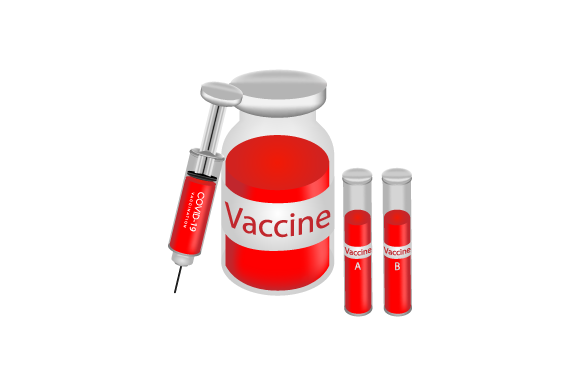
The term 3d realistic medicine vaccine design refers to high-fidelity digital renderings that simulate the physical properties of vaccines, vials, syringes, and the viral or bacterial agents they target. Unlike stylized illustrations or flat vector icons, this design philosophy prioritizes texture, lighting, material physics, and anatomical accuracy. The goal is to create an image that feels tangible and authentic, mimicking what one might see under a high-powered microscope or in a laboratory setting.
These designs often incorporate advanced rendering techniques to depict glass refraction on vial surfaces, the viscosity of liquid solutions, and the metallic sheen of needle components. Furthermore, they frequently include detailed representations of antigens or spike proteins, allowing viewers to visualize the microscopic battle between immune systems and pathogens. This level of detail is not merely aesthetic; it serves a functional purpose by grounding abstract scientific data in a visual reality that the human brain can process more intuitively.
When acquiring files for this type of work, professionals typically receive a comprehensive suite of formats including AI (Adobe Illustrator), EPS (Encapsulated PostScript), JPG (JPEG), and PNG. Each format serves a specific role in the workflow:
- AI and EPS: These vector-based files are essential for scalability. They allow designers to resize images without losing quality, which is crucial for everything from mobile app interfaces to large-scale billboard advertisements. While the core design is 3D rendered, the inclusion of vector layers ensures that text labels, arrows, and schematic overlays can be integrated seamlessly.
- JPG: High-resolution JPEGs provide compressed, ready-to-use images for web publishing and digital presentations where file size is a primary concern without sacrificing visible detail.
- PNG: Portable Network Graphics files preserve transparency, making them ideal for overlaying vaccine elements onto varied backgrounds, such as website headers, infographics, or presentation slides.
Evaluating Alternatives: Realism vs. Abstraction
Selecting the right visual asset requires a clear understanding of how 3d realistic medicine vaccine design compares to other common styles in the medical industry. The most frequent alternatives include flat vector illustrations, isometric diagrams, and hand-drawn sketches. Each style carries distinct strengths and tradeoffs that determine its suitability for different contexts.
Flat Vector Illustrations are characterized by clean lines, solid colors, and a lack of depth. They are highly effective for simplifying complex processes into step-by-step guides. For example, a flat illustration might be better suited for a quick infographic showing the steps of vaccination administration. However, they often lack the emotional weight and perceived authority that comes with realism. When the topic involves life-or-death stakes or cutting-edge science, flat graphics may feel too casual or generic.
Isometric Diagrams offer a middle ground. They provide a sense of three-dimensionality through geometric angles but do not attempt to mimic real-world textures or lighting. These are excellent for architectural planning of clinics or flowcharts of supply chains. Yet, they struggle to convey the delicate nature of biological molecules or the precision required in pharmaceutical manufacturing.
In contrast, 3d realistic medicine vaccine design excels in scenarios where credibility and immersion are paramount. If the objective is to demonstrate the sophistication of a new mRNA technology or to reassure the public about the safety and purity of a product, the photorealistic approach is superior. It bridges the gap between technical data and human understanding by providing a visual anchor that feels "real."
Strategic Applications and Best-Fit Scenarios
To make an informed decision about incorporating these assets, it is helpful to analyze specific use cases where 3d realistic medicine vaccine design adds the most value. The versatility of the included file formats (AI, EPS, JPG, PNG) further expands their utility across various media channels.
Educational Content and Public Health Campaigns
One of the primary drivers for using realistic 3D renders is education. In an era where misinformation spreads rapidly, having authoritative visuals is a powerful tool. A realistic depiction of a vaccine interacting with a cell can help explain the mechanism of action to a lay audience far more effectively than a diagram. The tactile quality of the render helps demystify the subject matter, reducing anxiety and fostering trust. The availability of transparent PNGs allows these elements to be placed directly into social media posts, while AI files enable editors to add custom text overlays for local language campaigns.
Medical Marketing and Product Launches
Biotech companies launching new products require visuals that communicate innovation and quality. A standard icon cannot convey the advanced engineering behind a new delivery system. Here, 3d realistic medicine vaccine design acts as a premium asset. It elevates the brand perception, suggesting that the company invests in high standards of research and development. The ability to extract specific elements via the vector files allows marketers to create dynamic animations or interactive web experiences that highlight specific features of the product.
Academic and Scientific Presentations
Researchers presenting at conferences need visuals that withstand scrutiny. While hand-drawn sketches are acceptable for conceptual brainstorming, final presentations benefit from the precision of 3D realistic models. These images can accurately represent protein folding, lipid nanoparticles, or adjuvant interactions, ensuring that the visual representation matches the data being presented. The high resolution of the JPG and PNG files ensures that these images look crisp on large projection screens.
Tradeoffs and Limitations to Consider
While the benefits are significant, adopting 3d realistic medicine vaccine design is not without its challenges. It is important to weigh these factors against your project's constraints before committing to this style.
Production Complexity and Cost
Creating high-quality 3D realistic renders requires specialized software and skilled artists. Consequently, these assets are generally more expensive and time-consuming to produce than flat vectors. If a project has a tight deadline or a limited budget, the cost-benefit analysis might favor simpler styles. However, purchasing pre-made libraries of these assets (available in AI, EPS, JPG, and PNG) can mitigate some of these costs, offering a balance between quality and efficiency.
Visual Overload
Realism brings detail, but too much detail can become distracting. In a dense infographic or a fast-paced video, hyper-realistic elements might overwhelm the viewer or obscure the key message. In such cases, a simplified or stylized version of the vaccine design might be more effective. The designer must exercise restraint, perhaps using the realistic render only as a focal point while keeping surrounding elements minimal.
Contextual Appropriateness
There are contexts where realism might feel inappropriate or even off-putting. For instance, in children's educational materials, overly realistic depictions of needles or viruses could induce fear or anxiety. In these scenarios, friendly, cartoonish, or soft-edged illustrations are preferred. The decision to use 3d realistic medicine vaccine design must always align with the psychological profile of the target audience.
Making the Final Decision
The choice between 3d realistic medicine vaccine design and other visual options ultimately depends on the specific goals of your communication strategy. If your priority is to establish authority, explain complex mechanisms, or evoke a sense of scientific advancement, the investment in realistic 3D assets is well justified. The comprehensive file set—including the scalability of AI and EPS files alongside the web-ready nature of JPG and PNG—provides the flexibility needed for multi-platform deployment.
Conversely, if your goal is rapid communication, simplicity, or a lighthearted tone, you may find that flat vectors or isometric graphics serve your needs more efficiently. There is no single "best" style; rather, there is the best style for the specific problem you are solving. By understanding the unique attributes of realistic 3D design, you can ensure that your visual choices enhance your message rather than distract from it.
As the field of medical communication continues to mature, the integration of high-fidelity 3D elements will likely become even more standard. Whether you are designing a brochure, a website, or a presentation deck, having access to 3d realistic medicine vaccine design assets equips you with the tools to tell your story with precision and impact. The key lies in applying these resources thoughtfully, ensuring that the visual complexity matches the informational depth required for your audience.