Unlocking Visual Depth: The 100 Mains Icons Set in Isometric 3D Style
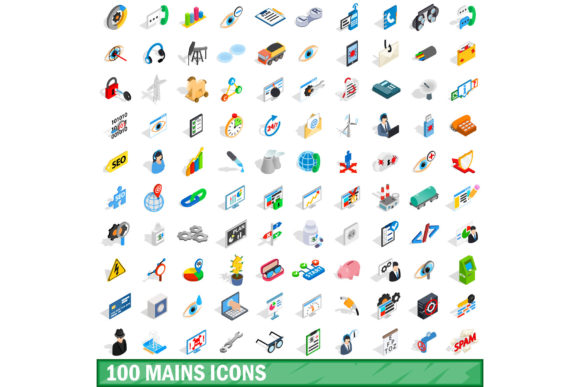
In the rapidly evolving landscape of digital design, static two-dimensional graphics often struggle to capture the attention of modern audiences. Users have become accustomed to immersive interfaces, dynamic content, and a sense of depth that traditional flat design cannot always provide. This is where the 100 Mains Icons Set, Isometric 3d Style emerges as a transformative asset for creators across various industries. By leveraging the geometric precision of isometric projection combined with the dimensional appeal of three-dimensional rendering, this collection offers a versatile toolkit for enhancing visual communication.
The transition from flat icons to isometric illustrations represents more than just an aesthetic shift; it signifies a move towards clarity, engagement, and professional polish. Whether you are building a complex dashboard, designing an educational module, or crafting a marketing campaign, the ability to visualize data and concepts in 3D can significantly improve user comprehension. This comprehensive guide explores the nuances of this specific icon set, its practical applications, and why it has become a preferred choice for professionals seeking high-quality vector illustrations.
Understanding the Isometric Advantage
To fully appreciate the value of the 100 Mains Icons Set, Isometric 3d Style, one must first understand the unique properties of isometric design. Unlike perspective drawing, which converges at vanishing points and creates a sense of distance that can distort proportions, isometric projection maintains parallel lines. This mathematical consistency allows designers to create objects that appear three-dimensional while retaining accurate scale and alignment.
This characteristic makes isometric icons particularly effective for infographics, technical diagrams, and user interface elements. When users interact with these visuals, their brains process the spatial relationships naturally, allowing for quicker recognition of complex systems. The "isometric" look provides a structured yet playful environment that feels organized without being sterile. It bridges the gap between technical schematics and engaging storytelling.
Furthermore, the 3D aspect adds weight and realism to the symbols. A simple 2D gear might represent a setting, but a 3D isometric gear implies mechanics, movement, and tangible functionality. This subtle psychological cue helps convey the intended message of the icon with greater authority and impact.
Technical Specifications and Format Versatility
A critical component of any design asset is its flexibility across different workflows and platforms. The 100 Mains Icons Set, Isometric 3d Style is engineered to meet these rigorous demands by offering a comprehensive range of file formats including JPG, EPS, AI, PSD, and PNG. Each format serves a specific purpose within the creative pipeline:
- AI (Adobe Illustrator): As native vector files, these allow for infinite scalability without loss of quality. Designers can modify colors, adjust stroke widths, or combine shapes to create entirely new compositions tailored to specific brand guidelines.
- EPS (Encapsulated PostScript): Essential for print media and compatibility with older vector software. This format ensures that the isometric details remain crisp when scaled up for large-format printing, such as banners or trade show displays.
- PSD (Photoshop Document): These layered files provide maximum control over textures, lighting effects, and shadows. Professionals can manipulate individual layers to integrate the icons seamlessly into complex photo-manipulations or composite images.
- PNG (Portable Network Graphics): Perfect for web use where transparency is required. The high-resolution raster versions ensure that the 3D shading looks smooth on screens of varying densities, including Retina displays.
- JPG (Joint Photographic Experts Group): Ideal for quick previews or contexts where file size is a primary concern, though they lack transparency support.
This multi-format approach ensures that whether you are a hobbyist working on a personal blog or a corporate team managing a global website, the assets will adapt to your technical requirements without compromising the integrity of the isometric design.
Practical Applications Across Industries
The versatility of the 100 Mains Icons Set, Isometric 3d Style extends far beyond simple decoration. Its utility spans a wide array of sectors, solving specific visual challenges in each domain. By examining real-world use cases, we can see how these icons drive engagement and clarify information.
Digital Product Design and User Interfaces
In the realm of software development and app creation, clarity is paramount. Isometric icons excel at representing abstract functions. For instance, a cloud storage service can be depicted not just as a cloud, but as a stack of 3D cubes within a cloud, visually communicating volume and structure. A fintech application might use a 3D wallet or coin stack to make financial transactions feel more tangible and secure.
Because the set includes 100 distinct mains icons, developers can maintain a consistent visual language throughout their entire product. The uniform lighting and angle of the isometric style ensure that navigation bars, feature lists, and landing pages look cohesive. This consistency reduces cognitive load for the user, allowing them to focus on the task at hand rather than deciphering inconsistent graphic styles.
Education and E-Learning
Educators and instructional designers face the challenge of making dry subjects engaging. The 3D nature of these icons brings life to textbooks and online courses. In a science lesson, a molecular structure or a biological cell can be rendered in isometric style to help students visualize the internal components. In history or geography lessons, maps and architectural landmarks gain depth, making the learning experience more immersive.
The 100 Mains Icons Set, Isometric 3d Style acts as a visual vocabulary for teachers. Instead of relying on generic clip art, educators can select precise icons that match the curriculum's complexity. The ability to edit these vectors means that a teacher can change the color scheme to match a specific chapter theme or highlight a particular part of an icon to draw student attention.
Marketing and Brand Storytelling
For business owners and marketers, standing out in a crowded digital space is essential. Isometric illustrations are currently trending because they offer a premium look that differentiates brands from competitors using flat designs. Marketing campaigns often utilize these icons to break down complex services into digestible steps.
Consider a SaaS company launching a new project management tool. They can use the icon set to illustrate the workflow: a 3D calendar icon for scheduling, a 3D chat bubble for communication, and a 3D chart for analytics. These visuals tell a story of efficiency and organization. The rich shading and depth of the 3D style add a layer of sophistication that elevates the perceived value of the brand.
Design Considerations and Best Practices
While the potential of the 100 Mains Icons Set, Isometric 3d Style is vast, successful implementation requires adherence to certain design principles. Simply dropping an icon onto a page does not guarantee success; integration is key.
Maintaining Consistency
The most common pitfall in using mixed media is inconsistency. If your website uses flat UI elements, introducing a heavy 3D isometric icon can create visual dissonance. To avoid this, designers should either adopt the isometric style across the board or use the 3D icons sparingly as focal points. If editing the icons, ensure that the lighting direction remains consistent. Changing the light source on one icon while keeping others lit from a different angle breaks the illusion of reality.
Color Harmony
Isometric icons rely heavily on gradients and shading to achieve their 3D effect. When integrating these into a design, it is crucial to choose background colors that do not clash with the shadows and highlights of the icons. Darker backgrounds often make the vibrant colors of the 3D icons pop, while lighter backgrounds can create a softer, more airy feel. Using the editable AI or EPS files allows designers to recolor the icons to perfectly match their brand palette, ensuring a seamless blend.
Scalability and Resolution
One of the primary advantages of this set is its vector nature. However, when exporting to PNG or JPG for web use, resolution settings matter. Always export at a high DPI (dots per inch) to prevent pixelation, especially since isometric designs often contain fine details in the shading. For mobile applications, consider creating multiple sizes of the icons to ensure they remain legible on smaller screens without losing their 3D character.
The Role of Vector Illustration in Modern Trends
The shift towards vector-based isometric graphics reflects a broader trend in digital design: the demand for scalable, accessible, and high-fidelity imagery. Raster images, which are made of pixels, lose quality when enlarged. Vector graphics, like those found in the 100 Mains Icons Set, Isometric 3d Style, are defined by mathematical equations, meaning they can be resized from a favicon to a billboard without any degradation.
This scalability is vital for responsive web design. As devices range from smartwatches to 4K monitors, designers need assets that adapt fluidly. Furthermore, the accessibility of these files supports the "mobile-first" philosophy. Since the icons are lightweight compared to high-resolution photographs, they contribute to faster page load times, which is a critical factor for SEO and user retention.
Additionally, the modularity of vector files encourages innovation. Designers are not limited to the pre-made arrangements. They can disassemble the icons, extract specific parts, and recombine them to create custom metaphors. This flexibility fosters creativity and allows brands to develop unique visual identities that resonate with their specific audience.
Accessibility and Inclusivity
Visuals play a significant role in making content accessible. While text is essential, well-designed icons can aid users with reading difficulties or those who process information better visually. The clear, distinct shapes of isometric icons, combined with their high contrast and recognizable forms, support inclusive design practices. By providing clear visual cues, designers can make their products usable by a broader demographic.
Implementation Workflow for Creators
Integrating these assets into a project follows a logical workflow that maximizes efficiency. Here is a typical process for utilizing the 100 Mains Icons Set, Isometric 3d Style:
- Selection: Identify the specific icons needed for the project. Browse the set to find matches for concepts like "security," "communication," "finance," or "technology."
- Import: Open the AI or EPS file in your preferred vector software. This ensures access to all layers and editable paths.
- Customization: Adjust colors to align with your brand identity. Modify the size and orientation if necessary. You can also group multiple icons together to create composite illustrations.
- Export: Once finalized, export the assets in the appropriate formats. Use PNG for transparent web elements and JPG for full-color backgrounds where transparency isn't needed.
- Integration: Place the icons into your layout. Ensure proper spacing and alignment to maintain the isometric grid structure.
This streamlined approach allows both novices and experts to produce high-quality results quickly. The availability of PSD files further empowers those who prefer Photoshop for texture work, allowing for a hybrid workflow that combines the best of vector precision and raster creativity.
Conclusion
The 100 Mains Icons Set, Isometric 3d Style represents a significant leap forward in visual asset availability. By combining the structural integrity of isometric projection with the richness of 3D rendering, it offers a solution that is both aesthetically pleasing and functionally robust. From enhancing user interfaces and educational materials to driving marketing campaigns, the applications are limitless.
Its support for multiple formats, including JPG, EPS, AI, PSD, and PNG, ensures compatibility with every stage of the design process. As digital landscapes continue to evolve, the demand for high-quality, scalable, and engaging visuals will only grow. Investing in a versatile collection like this empowers professionals, educators, and creators to communicate their ideas with clarity and impact. Whether you are refining a startup's branding or developing a comprehensive training program, these icons provide the foundation for compelling visual storytelling.